
The Mine Action Fellows closed out the 22nd Meeting of States Parties with a strong statement to the states delivered in Spanish and English.
Thank you, Madam President.
At the age of seven, I first encountered the legacy of landmines. I will never forget the first time my father told me not to stray from the path because it was dangerous. I remember not understanding the reasons behind that warning.
At 22, I came across an antipersonnel mine for the first time. Since then, I have been working and fighting to eradicate landmines from my community and my country - Colombia. Along the way, I have witnessed countless stories of survivors and victims who suffered the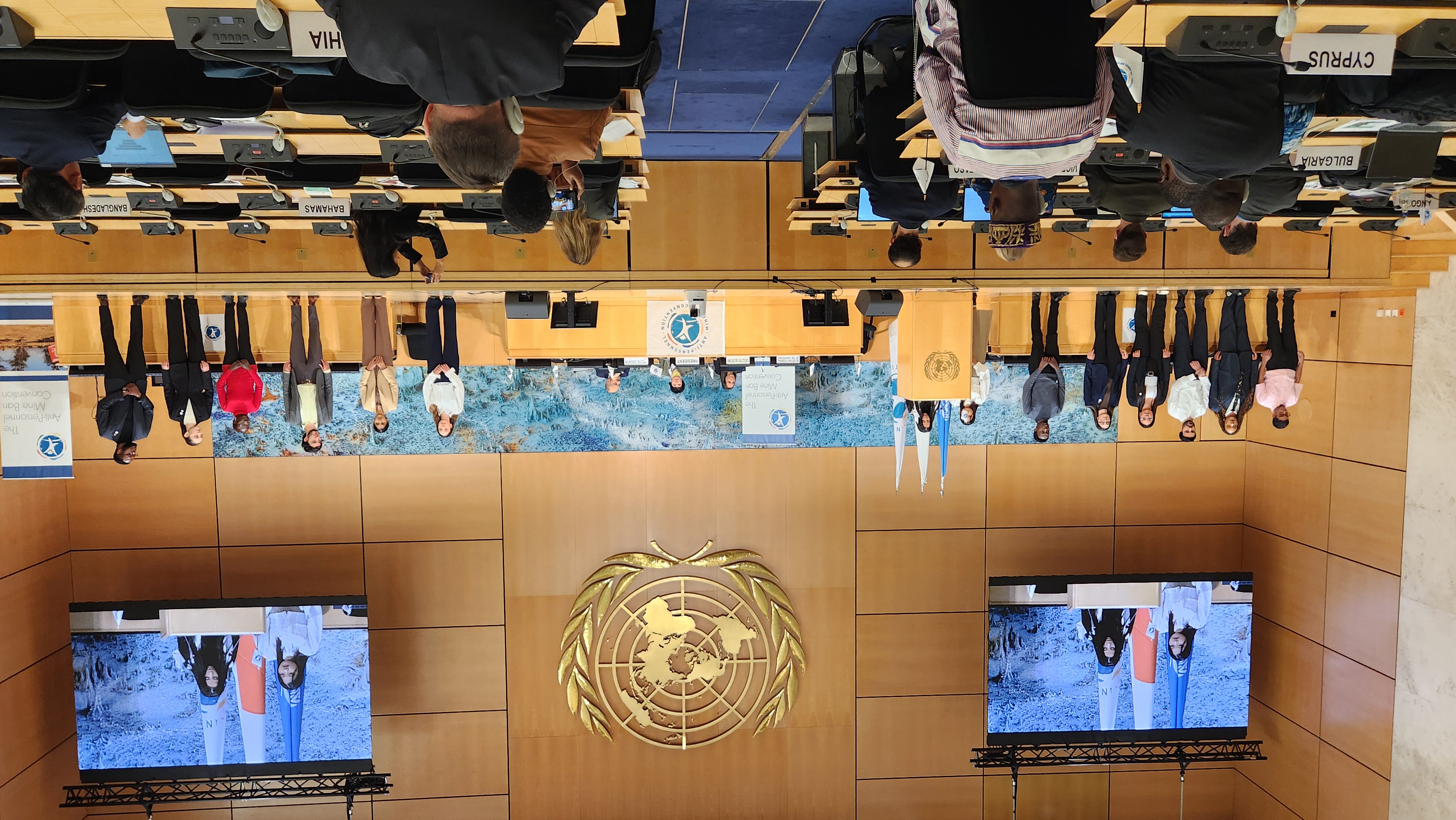 indiscriminate consequences of these weapons.
My mission as a young person working in mine action is to restore land free of contamination, so that life and hope can flourish once again.
In 2025, the year the world had hoped to be free of landmines; we remain far from that aspiration, facing persistent challenges in stopping mine use, fulfilling treaty obligations, and protecting people from harm. We congratulate the Kingdom of Tonga and the Marshall Islands on their accession of the Mine Ban Treaty. We also applaud Micronesia and Lebanon on their progress towards joining the Convention and encourage them to complete the process as soon as possible. The Mine Action Fellows are grateful to Canada, Switzerland and Ireland for their sponsorship and support. Importantly, we wish to recognize the efforts of all deminers, risk educators, and other actors for their crucial daily work. As young people, we care deeply about our future and continue to seek a world without mines.
For you it may feel like Article 7 reports, funding cuts, extension requests, victim assistance and risk education are theoretical problems to solve with the correct language and reports. But for us funding cuts mean job losses, clearance delays mean another year displaced from our homes, risk education keeps the kids in our neighbourhoods safe, victim assistance is reintegration for our peers and medical care for our patients. The six of us who are EORE professionals know that effective risk education required by the Mine Ban Treaty must be: gender, age, and disability-sensitive; tailored to diverse community needs, and focused on high-risk groups and activities. All of these issues are not only core treaty obligations but also they are our present and our future.
Today, we stand here as young people deeply concerned that five states are withdrawing from the Mine Ban Treaty. This decision is a dangerous and unprecedented setback, undermining a convention created to protect lives—ours, and those of future generations. Every withdrawal weakens global norms and increases the risk of renewed landmine use. We deeply regret these decisions because of their knock-on effects, including the potential proliferation of mines and the erosion of hard-won humanitarian principles.
We recall that treaty suspensions are not permitted by the Mine Ban Treaty, and we thank the states that formally objected. We must acknowledge the suffering in Ukraine, where civilians continue to endure the devastating impact of mines. We do not want those communities or any other to suffer more. This is why full respect for the convention is essential.
We urge all states reported to be using mines to cease immediately and to take meaningful steps toward adherence to the treaty. You endanger our lives—you are the ones deploying these weapons; we are the ones who will live with their consequences. Outside this room, real people are paying the price for the decisions made here today.
With 90% of mine victims being civilians and half of all casualties being children, renewed resolve and collective action are essential to regain momentum toward a world truly free of landmines. We encourage non-signatory countries to join the treaty and our efforts.
We ask you to uphold your commitments, protect civilians, and ensure that this convention remains a true instrument of peace and humanity.
Thank you

Do you like this page?