

By Jordan Edward-Wright, former intern with Mines Action Canada and Campaign to Ban Landmines Nepal.
In early May 2025 I landed in the capital of Nepal, Kathmandu, marking the start of a three month internship with the Campaign to Ban Landmines Nepal (NCBL). I don’t know what I was expecting of Kathmandu, but I’m happy with what I found. When I stepped out of the airport I was greeted with new sounds, people, smells, and sights, and I instantly became excited for what the next three months would hold.
My journey to Nepal didn’t begin in May but rather it started in early January 2025 when I received an email from my university, the University of Ottawa, discussing the possibility of partaking in an international internship. I jumped at the possibility of working abroad, as it was something I have always wanted to do, so I eagerly filled out my application and selected Mines Action Canada as my preferred option. After about a month and a bit filled with anticipation I received my internship offer from Mines Action Canada, in the role of a Mine Action Program Support Intern. With the help of Mines Action Canada I was set to start work with their partner organization in Nepal, NCBL.
The first couple of days in the city were a blur but after having a few days to settle into my new surroundings I headed to the office for the first time. Just down the road from the famous Monkey Temple, my office, which was surprisingly cozy, greeted me for the first time. On that first day I met my supervisor and he helped explain and fill in the gaps of what I knew about Nepal’s relationship and history with landmines. As of now Nepal is officially landmine free but they are still dealing with the discovery and sometimes explosion of improvised explosive devices, remnants of war and the occasional landmine. Many of these devices and landmines can be traced back to the Nepalese Civil War between 1996-2006 in which both sides used landmines throughout the country.
My time working with NCBL has been an eye opening experience. NCBL played an important role in advocating for a mine free Nepal, and they also helped with the realization of the Mine Ban Treaty. NCBLs history and contribution to the international treaty process has helped me understand the realities of war and peace. Today, NCBL continues their work of advocacy and mine action as they try to push the government to officially join the Mine Ban Treaty and the Convention on Cluster Munitions. Throughout my internship I’ve been able to help NCBL with their mission by facilitating school events and meetings with government officials as well as doing research and contributing to NCBL’s social media presence.
Regardless of its landmine free status, undiscovered landmines, explosive devices and remnants of war are still harming Nepali civilians both physically and mentally. During the Nepalese Civil War (1996-2006) landmine use was not properly recorded and so there is always the risk of new incidents occurring and there have been many cases of people falling victim to these weapons after Nepal was labeled landmine free in 2011. Throughout my research I found instances of explosions caused by old mines and remnants of war some of which were even found near schools.
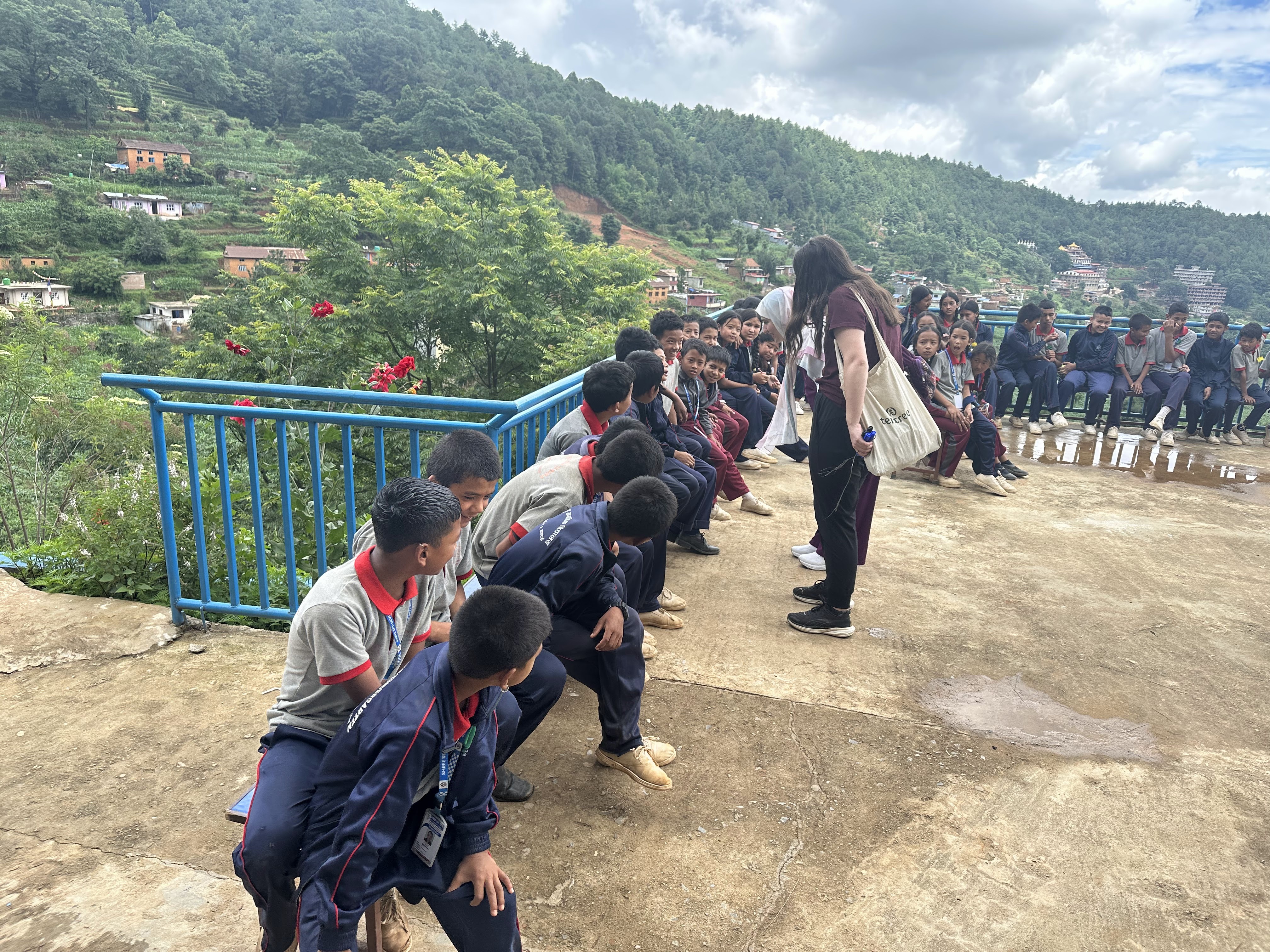
Children are some of the most at risk when it comes to landmines because in the eyes of children mines often look like toys. One of the highlights of this internship was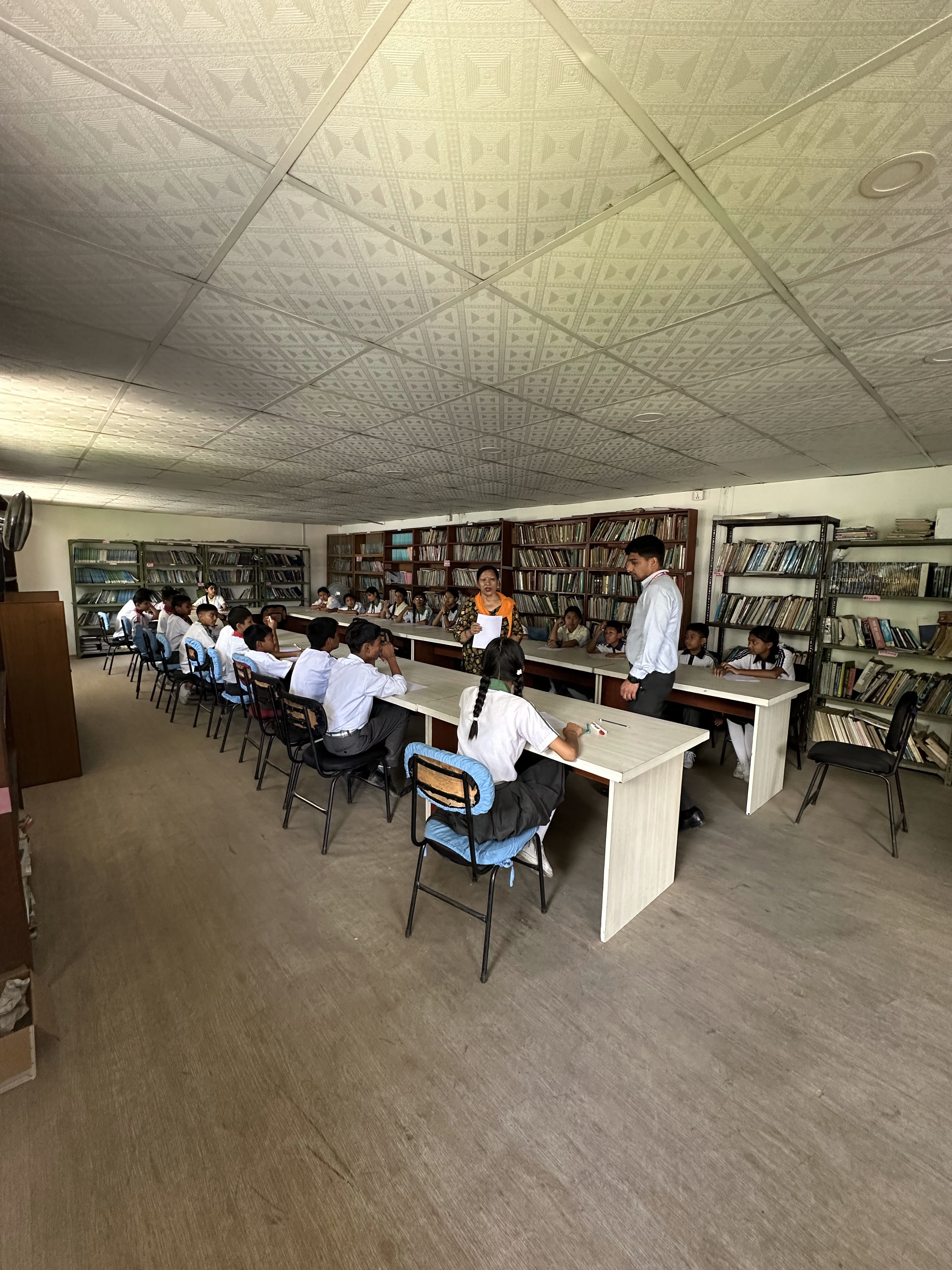 the field work opportunities I participated in. In order to help keep kids safe, I took part in multiple school visits in which myself and my colleagues helped educate students on the risks and dangers posed by landmines. On one of these visits myself and the other intern were speaking to a student and he told us how he had to walk two hours back and forth from school everyday. Four hours a day he would walk on unpaved roads, trails in the bush, rain or shine. At that moment I realized his experience is not unique to him because many students face the same reality. The journeys these kids take on everyday to reach school are full of risks and there is always a chance one of those risks is a landmine. After hearing his story and the story of other students in addition to my knowledge of landmines, I truly understood the value of risk education and NCBLs work because knowledge about landmines is an extra tool kids can use to keep themselves and others safe.
Looking back at my three months in Nepal I don’t think I could have hoped for a better experience. Of course not everything was sunshine and rainbows but regardless I wouldn’t change a thing. I got to learn about landmines and disarmament, better understand how NGOs function, and best of all I got to work in the field by visiting local schools. In three months I experienced so many different sides of Nepal, the professional and city life, the touristy parts and the rural, and remote mountains that I experienced by trekking. At the end of the day none of this would have been possible without the University of Ottawa and most of all Mines Action Canada. I went to Nepal for the work experience and to learn more about disarmament but I came back with memories of a lifetime.
Do you like this page?